
TMS Therapy for Depression in Huntsville, Alabama
A Safe, Effective, and Non-Invasive Treatment for Depression
At Alabama Institute of Mood and Memory (AIMM), we offer Transcranial Magnetic Stimulation (TMS) using the advanced Apollo TMS system.
TMS at AiMM is physician-led and supervised by a board-certified psychiatrist with expertise in interventional psychiatry - TMS, SPRAVATO®, and ECT.
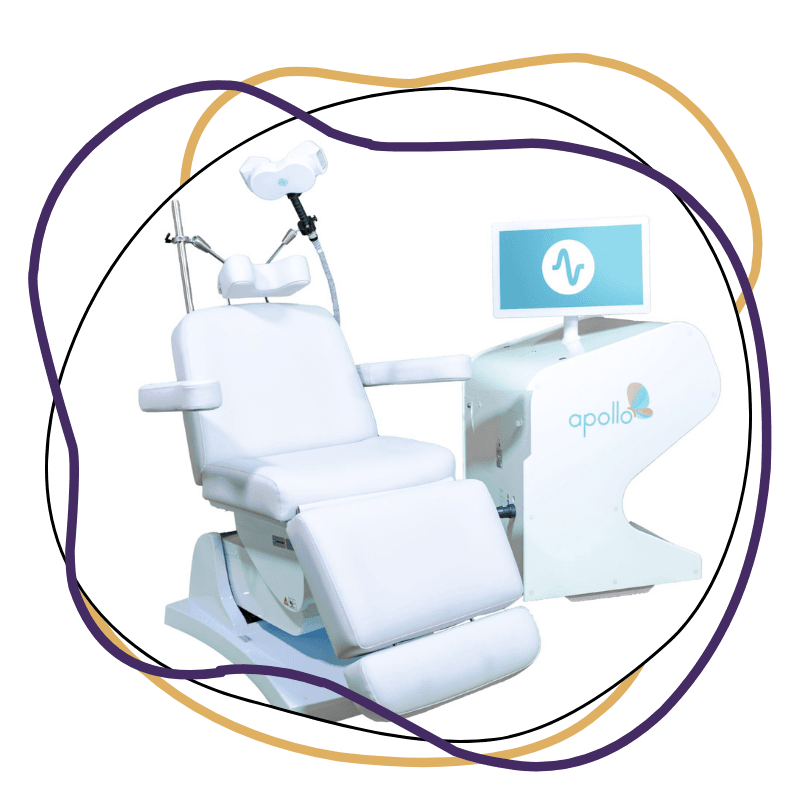
AiMM offers Apollo TMS—an advanced TMS system featuring an industry-leading short biphasic pulse width designed to optimize cortical neuron activation and provide highly efficient cortical stimulation compared with conventional TMS technologies.
TMS is an FDA-cleared treatment that uses gentle magnetic pulses to stimulate brain areas involved in mood regulation.
TMS may be an effective option for individuals struggling with depression, especially when medications have not provided sufficient relief or have caused unwanted side effects.
Unlike medications, TMS works directly on the brain circuits associated with mood without affecting the rest of the body.
We perform treatment in our office; it requires no anesthesia or sedation and allows patients to return to normal activities immediately afterward.
Listen to Dr. Raj
Why We Chose Apollo TMS
At AIMM, we carefully selected the Apollo TMS system because of its focus on precision, comfort, and personalized care.
-
Apollo TMS utilizes modern technology designed to deliver accurate, reliable, and consistent treatment. This helps ensure that each session is performed with precision while maximizing patient comfort.
-
Patients remain awake and comfortable throughout treatment. Sessions are well tolerated, and most individuals are able to drive themselves to and from appointments and resume their normal daily routines immediately afterward.
-
Every patient is unique. Apollo's advanced treatment capabilities allow us to tailor treatment to individual needs, helping us provide a more personalized treatment experience.
-
No anesthesia or sedation required
No memory loss
No recovery period
No systemic medication side effects
Performed entirely in an outpatient setting
Frequently Asked Questions on TMS
What is TMS therapy?
Transcranial Magnetic Stimulation (TMS) is a noninvasive treatment that uses precisely targeted magnetic pulses to stimulate areas of the brain involved in mood regulation. TMS does not require surgery, anesthesia, or hospitalization.
At the Alabama Institute of Mood and Memory (AiMM) in Huntsville, TMS is offered as part of our comprehensive approach to treating depression and other appropriate psychiatric conditions.
Who may benefit from TMS?
TMS may be considered for people with depression who have not experienced adequate improvement with antidepressant medications, have difficulty tolerating medication side effects, or are looking for additional treatment options.
Your psychiatrist will review your symptoms, previous treatments, medications, medical history, and treatment goals to determine whether TMS is appropriate for you.
Is TMS FDA-cleared for depression?
Yes. TMS is FDA-cleared for the treatment of major depressive disorder in appropriate patients. Certain TMS systems and treatment protocols also have FDA clearance for other conditions.
Your physician will discuss whether a particular TMS protocol is appropriate and whether its use is FDA-cleared or considered off-label for your condition.
How does TMS work?
During TMS treatment, an electromagnetic coil is positioned against the scalp. The device delivers magnetic pulses that stimulate specific brain networks involved in depression and emotional regulation.
Repeated stimulation over a series of treatments can help change the activity and connectivity of these brain networks.
Does TMS hurt?
Most patients tolerate TMS well. You may notice tapping, clicking, or a tingling sensation on the scalp during treatment.
Some patients experience temporary scalp discomfort or headache, particularly during the first several treatments. These symptoms often become less noticeable as treatment continues.
Do I need anesthesia or sedation for TMS?
No. TMS is performed while you are awake and alert and does not require anesthesia or sedation.
Patients can usually drive themselves to and from treatment and return to work or normal daily activities immediately afterward.
How long does a TMS treatment take?
Treatment time depends on the protocol being used. Some traditional TMS sessions may take approximately 20–40 minutes, while newer protocols such as intermittent theta-burst stimulation (iTBS) can be considerably shorter.
Your treatment schedule will be discussed with you before therapy begins.
How many TMS treatments will I need?
A typical course of TMS for depression involves treatment five days per week for several weeks, followed in some cases by a tapering schedule.
The exact number of treatments varies based on the protocol, your clinical response, insurance requirements, and your psychiatrist's recommendations.
How soon will I notice improvement?
Response varies from person to person. Some patients notice improvement within the first few weeks, while others may improve later in the treatment course.
Progress is monitored throughout treatment using your symptoms, clinical evaluation, and standardized depression rating scales when appropriate.
What are the most common side effects of TMS?
TMS does not typically cause the systemic side effects commonly associated with medications.
The most common side effects include:
Mild headache
Temporary scalp discomfort
Tingling or tapping sensations during treatment
Serious complications are uncommon. Seizure is a rare but recognized risk of TMS. Your physician will review your medical history and medications carefully before treatment to minimize risk.
Does TMS cause memory loss?
TMS is not generally associated with the significant memory impairment that can occur with some other treatments.
Many patients specifically consider TMS because it is noninvasive and does not require anesthesia.
Can I continue my medications while receiving TMS?
In many cases, yes. Patients frequently continue antidepressants and other psychiatric medications while receiving TMS.
Your psychiatrist will review your medications before treatment because certain medications or medication changes may affect your TMS treatment plan or seizure threshold.
Do not stop or change medications without discussing them with your treating clinician.
Is TMS the same as ECT?
No. TMS and electroconvulsive therapy (ECT) are very different treatments.
TMS uses magnetic stimulation, does not require anesthesia, and is generally performed as an outpatient treatment with no recovery period.
ECT is performed under anesthesia and induces a controlled therapeutic seizure. ECT remains an important treatment option, particularly for certain severe or urgent psychiatric illnesses.
AiMM can help patients understand which interventional treatment may be most appropriate for their individual situation.
What is the difference between TMS and Spravato?
TMS is a non-medication treatment that uses magnetic stimulation of targeted brain networks.
SPRAVATO® (esketamine) is a prescription medication administered as a nasal spray under medical supervision.
Both may be considered for treatment-resistant depression, but eligibility, treatment schedules, risks, insurance requirements, and expected experiences are different. AiMM offers both treatments, allowing patients to discuss multiple treatment options with their psychiatrist.
Does insurance cover TMS?
Many commercial insurance plans and Medicare provide coverage for TMS for major depressive disorder when their medical-necessity requirements are met.
Requirements vary by insurance plan and may include documentation of previous medication trials, psychotherapy, diagnosis, and prior authorization.
The AiMM team can help determine your insurance benefits and obtain authorization when required. Insurance authorization does not guarantee payment, and individual benefits, deductibles, and copayments may apply.
What if my insurance does not cover TMS?
Coverage depends on your diagnosis, insurance plan, prior treatments, and the specific TMS protocol being considered.
If a treatment is not covered, AiMM can discuss available self-pay options when clinically appropriate.
Can TMS be used for anxiety?
TMS is primarily established as a treatment for major depressive disorder, although anxiety symptoms frequently occur along with depression and may improve as depression improves.
TMS is also being studied and used in selected circumstances for several other psychiatric and neurologic conditions. Some of these applications may be off-label.
Your psychiatrist can explain the available evidence and whether TMS is reasonable for your particular condition.
Can TMS be used for OCD?
Certain TMS approaches have FDA clearance for obsessive-compulsive disorder (OCD). Treatment protocols and insurance coverage for OCD differ from those used for depression.
An evaluation is necessary to determine whether TMS is an appropriate option.
Can TMS be used in older adults?
Yes. Older adults may be candidates for TMS, particularly when depression has not responded adequately to medication or medication side effects are problematic.
Because AiMM provides both adult and geriatric psychiatric care, treatment decisions can take into account medical conditions, cognitive concerns, medications, and other factors that are especially important in older adults.
Who should not receive TMS?
TMS may not be appropriate for everyone. Particular attention is required for people with certain implanted metallic or electronic devices in or near the head, a history of seizures, or other neurological or medical conditions.
Dental fillings and most routine dental work generally do not prevent TMS treatment, but all implants and medical devices should be discussed with your physician before treatment.
What happens before starting TMS?
Before beginning treatment, you will have a psychiatric evaluation to confirm your diagnosis, review previous treatments, evaluate medications and medical history, and determine whether TMS is appropriate.
If treatment is recommended, the TMS team will perform an initial treatment-planning or mapping session to determine the appropriate stimulation location and treatment intensity.
What is TMS mapping?
During the initial mapping session, the treatment team determines the appropriate location and stimulation intensity for your treatment.
One component may involve determining your motor threshold—the minimum amount of stimulation needed to produce a measurable motor response. This information helps individualize the treatment dose.
Can I work during a course of TMS?
Yes. Most people can continue working and carrying out their normal daily activities during TMS treatment.
Because there is no anesthesia or sedation, there is generally no post-treatment recovery period.
What happens after I finish TMS?
Your psychiatrist will evaluate your response near the end of the treatment course and develop an ongoing treatment plan.
Depending on your individual situation, this may include medication management, psychotherapy, follow-up psychiatric care, or maintenance TMS when clinically appropriate.
How do I find out if I am a candidate for TMS?
The first step is a consultation with the Alabama Institute of Mood and Memory.
We will review your diagnosis, previous medication and therapy treatments, medical history, insurance requirements, and treatment goals to determine whether TMS may be appropriate for you.
Interested in TMS therapy in Huntsville, Alabama?
Contact the Alabama Institute of Mood and Memory (AiMM) to schedule a TMS consultation and learn whether this treatment may be right for you.
Schedule a TMS consultation
Because Every Mind Matters.
What to Expect
TMS treatments are performed in our office while you sit comfortably in a treatment chair. During the session, gentle magnetic pulses are delivered to targeted areas of the brain involved in mood regulation.
Most treatment sessions last approximately 20 to 30 minutes. A typical treatment course involves sessions five days per week over several weeks, although treatment plans are individualized based on each patient's needs.
Is TMS Effective?
TMS has helped many individuals experience meaningful improvement in symptoms of depression, including patients who have not responded adequately to antidepressant medications. While individual results vary, TMS has become an important treatment option for many people seeking relief from depression.
Expert Care Matters
While technology plays an important role, successful TMS treatment depends on careful patient selection, accurate treatment planning, and close clinical oversight.
At AIMM, TMS treatment is supervised by a board-certified psychiatrist with expertise in mood disorders, geriatric psychiatry, interventional psychiatry, Electroconvulsive Therapy (ECT), and advanced depression treatments. Our goal is to combine leading-edge technology with compassionate, evidence-based care tailored to each individual.
Is TMS Right for You?
If you are struggling with depression and have not achieved the improvement you hoped for with traditional treatments, TMS may offer a new path forward.
We invite you to schedule a consultation to learn whether TMS therapy may be an appropriate treatment option for you.
Because Every Mind Matters.